In this lesson, students will use short video clips to learn about major events occurring during the Cold War, the causes of these events, and their impact on the U.S., Soviet Union, and the world. Students will summarize this information by providing a written response that analyzes the legacy of the Cold War.
Landmark Supreme Court Cases
When the stories of We the People become cases before the U.S. Supreme Court, and when those cases result in the opinions of the Court, history turns. The ways we think about and live under the Constitution are reflected in the Court’s interpretations in both their historical contexts and their legacies. Some cases — and the Court’s opinions in them — so profoundly alter our constitutional understandings that they can only rightly be called Landmark Cases, markers of where we have traveled as a nation. In this way, the Landmark Cases show us what we have tried, where we have been, and where we are — leaving We the People and future sessions of the Supreme Court to determine how we move forward toward a more perfect union.
Women’s Suffrage and the 19th Amendment
This lesson looks at the historical context of women’s suffrage, tactics used in the movement and different perspectives of the suffrage movement. Students will view C-SPAN video clips to learn about the suffrage movement and evaluate the tactics used.
A More Perfect Union: George Washington and the Making of the Constitution
This animated video highlights the Constitutional Convention and George Washington’s role in the formation of the new government. Events covered in the video include the causes leading to the 1787 Constitutional Convention, the numerous compromises included in the document, and the challenges in ratifying the Constitution. The video has a run time of 23 minutes, and is broken into three chapters for easy navigation.
Christian Legal Society v. Martinez (2010)
Did a university’s denial of recognition to a student group that violates the school’s nondiscrimination policy infringe the students’ rights? This case summary shows how the Supreme Court answered that question in 2010.
The Constitution: Drafting a More Perfect Union
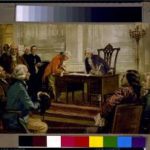
Students will analyze an unidentified historical document and draw conclusions about what this document was for, who created it, and why. After the document is identified as George Washington’s annotated copy of the Committee of Style’s draft constitution, students will compare its text to that of an earlier draft by the Committee of Detail to understand its evolution.
The Red Scare and McCarthyism
This lesson provides an overview of events such as the Rosenberg trials, blacklisting in Hollywood and the rise and decline of McCarthyism. Students will use information gathered from short C-SPAN video clips to summarize the government’s actions during that time and evaluate the appropriateness of these actions.
American Reformers (CKHG Unit)
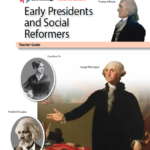
This unit (the second part of Early Presidents and Social Reformers) focuses on the efforts to improve American society in the early 1800s. Across 6 lessons, students learn about the temperance movement, free public education, the abolitionists’ crusade to abolish slavery, and the early women’s rights movement. The unit explores early reformers’ legacy in ongoing modern-day struggles for equality and civil rights.
America and Red Scare
The Cold War was sparked by the immediate aftermath of World War II. The Allied Forces were divided by ideology and quickly separated into two camps: the Western democracies, led by the United States, and the Communist nations, dominated by the Soviet Union. This alignment served as the basic framework of the Cold War over the next fifty years, from 1947-1991. As America positioned itself in opposition to totalitarian regimes, American citizens were forced to confront realities of what “freedom” meant, or should mean.
New Unit Plan Created: A Map Study of the Battle of Gettysburg
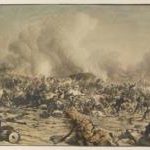
The resource takes a slightly unconventional approach to studying and understanding the battle. Rather than a traditional lesson about the events, A Map Study of the Battle of Gettysburg uses two maps of the town, both ca. 1863, and its surrounding areas to understand how the battle unfolded and resulted in a Union victory because of the geography.